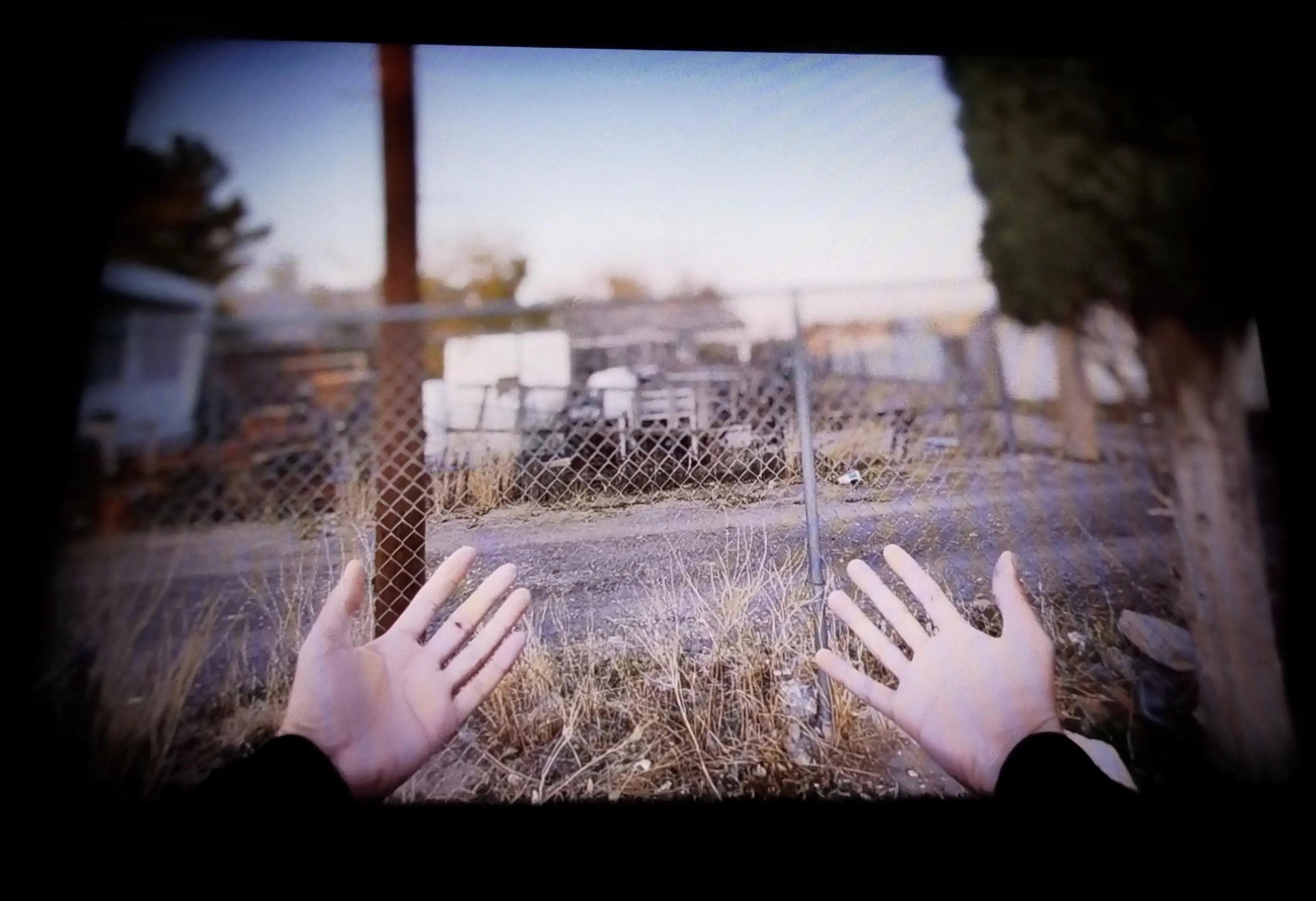
Depersonalization
Depersonalization is medically recognized as the experience of feeling detached from one's mental processes, body, or actions as if they are an outside observer. It is most commonly induced under the influence of moderate dosages of dissociative compounds, such as ketamine, PCP, and DXM.
Depersonalization or depersonalisation (sometimes abbreviated as DP) is medically recognized as the experience of feeling detached from one's mental processes, body, or actions as if they are an outside observer.123 During this state, the affected person may feel like they are "on autopilot" and that the world is lacking in significance.34 Individuals who experience depersonalization feel detached from aspects of the self, including feelings (e.g., "I know I have feelings but I don't feel them"),5 thoughts (e.g., "My thoughts don't feel like my own")6, and sensations (e.g., touch, hunger, thirst, libido).278 This can be distressing to the user, who may become disoriented by the loss of a sense that their self is the origin of their thoughts and actions.
It is perfectly normal for people to slip into this state temporarily,9 often without even realizing it. For example, many people often note that they enter a detached state of autopilot during stressful situations or when performing monotonous routine tasks such as driving.
It is worth noting that this state of mind is also commonly associated with and occurs alongside derealization. While depersonalization is a subjective experience of unreality in one's sense of self, derealization is a perception of the unreality of the outside world.2478
Depersonalization is often accompanied by other coinciding effects such as anxiety,25 depression,5 time distortion,6 and derealization.710 It is most commonly induced under the influence of moderate dosages of dissociative compounds, such as ketamine,9 PCP,1112 and DXM. However, it can also occur under the influence of cannabis,91013 psychedelics,9 and to a lesser extent during the withdrawal symptoms of depressants1415 and SSRI's9.
Analysis
In psychiatry, chronic depersonalization that arises during sobriety is identified as "Depersonalization/Derealization Disorder" and is classified by the DSM5 as a dissociative disorder.7
Temporary depersonalization/derealization symptoms lasting hours to days are common in the general population. Approximately one-half of all adults have experienced at least one episode of this effect within their lifetime, and the gender ratio for the disorder is 1:1.7 Chronic depersonalization is more common within individuals who have experienced severe trauma or prolonged stress and anxiety. The symptoms of both chronic derealization and depersonalization are common within the general population, with a lifetime prevalence of up to 26-74% and 31–66% at the time of a traumatic event. 16
Within the context of identity-altering effects, depersonalization can be considered as being at the opposite end of the identity spectrum relative to states of unity and interconnectedness. This is because, during depersonalization, a person senses and attributes their identity to nothing, giving a sense of having no self. However, during a state of unity and interconnectedness, one senses and attributes their identity to everything, giving a sense that the entirety of existence is their self.
Replications
Personal Commentary
Depersonalization is an effect that I have experienced during almost every waking second of my adult life. It started as a young teenager when I began to realise that I no longer felt as if I was myself or that I even had a sense of self, alongside the sensation that my entire body and consciousness was in a state of mechanical autopilot. However, at the age of 17, my feelings of depersonalisation were spontaneously eradicated during a single LSD trip. This experience returned my sense of selfhood and gave me the profound sensation that I was not an electrochemical machine responding to external sensory input with fully pre-programmed responses. Instead, I realised that I was, in fact, a conscious agent living in an external world and completely capable of making my own choices through the application of free will, a state of mind which I have come to realise most people take entirely for granted.
Although this feeling of "normalcy" lasted the better part of 3 years, it eventually began to fade back into depersonalisation. It's been 6 years now and I have not experienced that sense of selfhood or free will since I was a teenager. I've given up hope that I ever will again. However, it's important to note that despite this persistent and continuous depersonalisation, my ability to function and live a happy life remains completely unaffected. This has left me with the impression that those who experience fear or disorientation when undergoing this state are not experiencing feelings that are intrinsic to the condition itself, but are instead responding to a forced change in their culturally embedded assumptions on the nature of human identity.
 Josie Kins~2017–2021